Blank Planchet
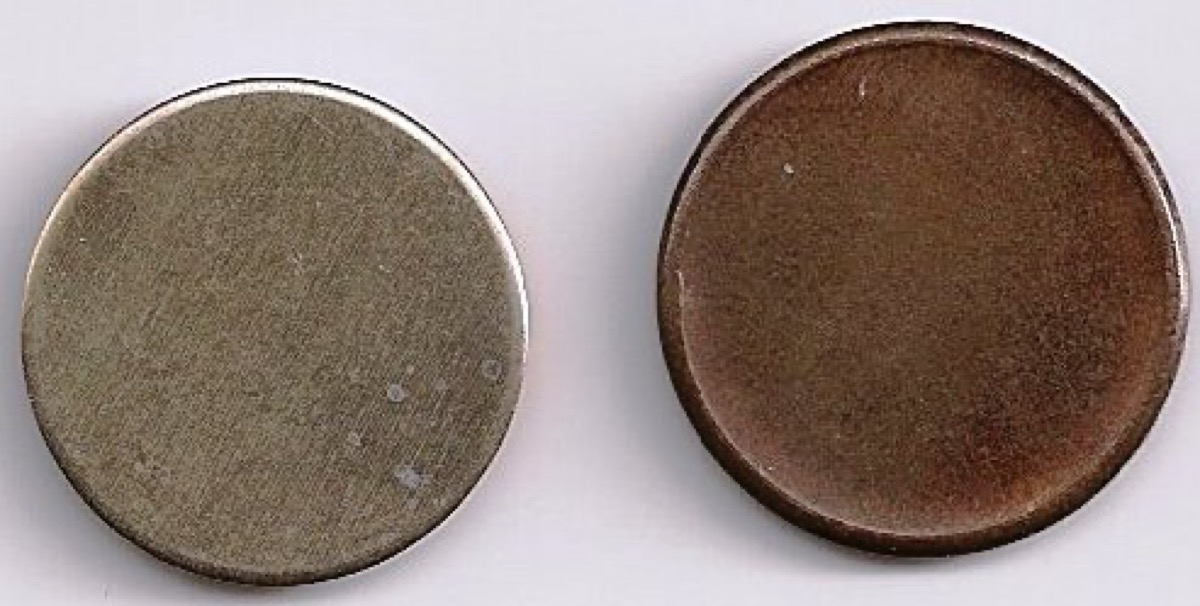
Photo: Economicrealist (Commons uploader; no Artist field in file metadata) · CC BY-SA 3.0 via Wikimedia Commons · Two unstruck coin blanks side by side: a Type I blank (flat, no rim) and a copper Type II planchet with upset rim - exactly the blank-planchet error as it enters circulation. Visually verified; modest 493x249 scan. Larger PD alternative if needed: File:500 pesos de Mexico de 1986-1992 (cospel).jpg (crisp single Mexican blank, 1011x912).

What it is
Every coin starts as a plain punched-out disc of metal called a planchet. Sometimes a planchet skips the striking press entirely, rides through the counting and bagging machinery, and leaves the mint looking like a coin that forgot to get a design. There are two types: Type 1 blanks are flat discs fresh from the punching press, while Type 2 planchets have been through the upset mill, which raises a slight rim around the edge to prepare for striking. Type 2 is the kind most often found in circulation and rolls.
How to spot it
You're looking at a smooth metal disc with no design at all, so identification is about confirming it's a real planchet and matching it to a denomination. Weigh it and measure it: a cent planchet should weigh 2.5 g (zinc era) or 3.11 g (copper era), a nickel 5.0 g, a clad quarter 5.67 g. Check for the raised proto-rim of a Type 2 planchet. The surface should show fine original planchet texture, not grinding or sanding marks from someone erasing a real coin's design.
What it's worth
Blank cents and nickels bring $2-$10, dimes and quarters $10-$30, and half dollar or dollar blanks more. Silver-era and older blanks carry bigger premiums. These are fun, affordable, and a good gateway error, but they're also easy to fake by grinding, so buy certified for anything pricey.
Famous examples
- Type 2 blank Lincoln Cent planchets
- Blank Jefferson Nickel planchets
- Blank clad Washington Quarter planchets