Rotated Die
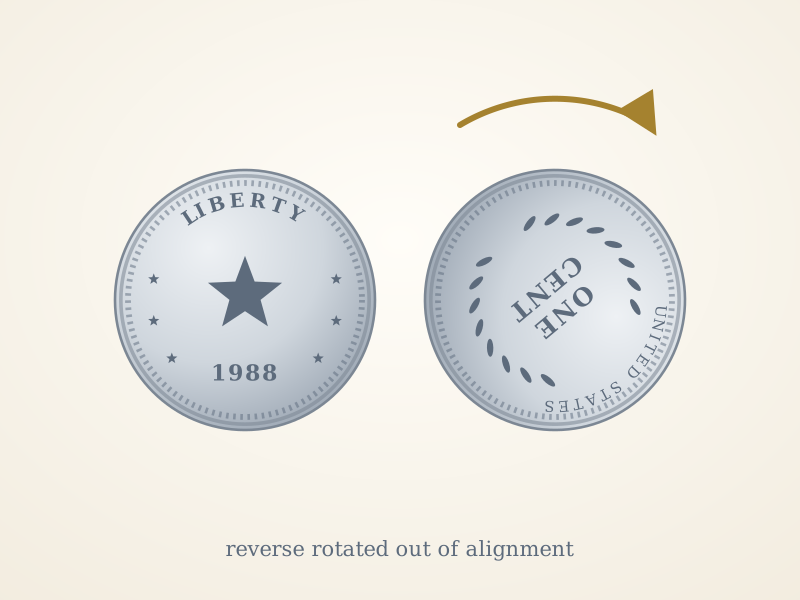
Illustrative example — errors vary coin to coin.
What it is
US coins are struck in 'coin alignment': hold a coin by its edges and flip it top to bottom, and the back should be right-side up. If a die was installed rotated, or worked itself loose and turned in the press, the two sides end up misaligned — anywhere from a few degrees to a full 180 degrees. A 180-degree rotation is called medal alignment, since that's how medals are normally made. The error lives in the die setup, so a whole run of coins can share the same rotation.
How to spot it
Hold the coin with the obverse perfectly upright, pinched by the edges at 12 and 6 o'clock, then flip it over top-to-bottom without twisting. The reverse should be perfectly upright too. If it's tilted, estimate the rotation in degrees. Anything under about 15 degrees is within mint tolerance and worthless; collectors start caring around 25-45 degrees, and value climbs steeply toward 90 and 180 degrees. Repeat the flip a few times, because it's easy to twist your wrist and fool yourself.
What it's worth
Minor rotations (under 15-20 degrees) add nothing. A 90-degree rotation on a modern coin might bring $20-$75, and a full 180-degree rotation $50-$200+, more on scarcer series. Certified examples sell much more easily since rotation is hard to prove in photos.
Famous examples
- 1988-D Rotated-die Lincoln Cents
- Rotated reverse Barber coinage
- 180-degree rotated modern quarters