Die Break
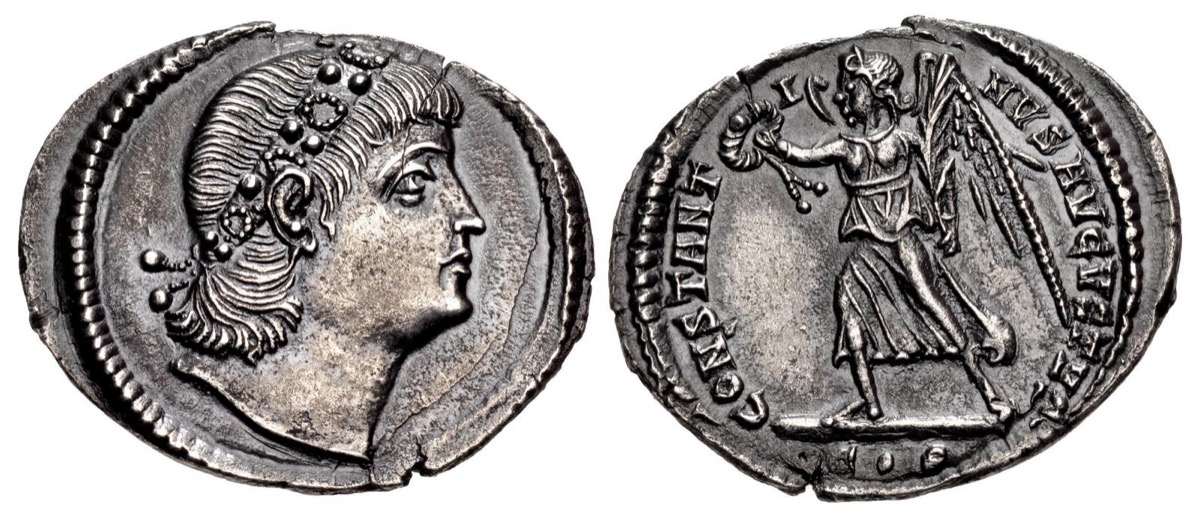
Photo: Classical Numismatic Group · CC BY-SA 2.5 via Wikimedia Commons · Roman siliqua of Constantine II (CNG auction photo, described 'die break and a few marks on obverse'); prominent raised die-break ridges arc across the obverse around the portrait. No usable US die-break photo found on Commons.

What it is
A die break is the general term for when part of the die face actually breaks off, rather than just cracking. Where the die is missing a piece, the coin metal flows into the gap and forms a raised, featureless blob on every coin struck afterward. When the break happens away from the rim it's called an interior die break; when it includes the rim it's called a cud. Small round interior breaks are nicknamed 'die chips' and are very common, especially in tight corners of the design like the number 4 or the letter B.
How to spot it
Scan the design with a loupe for raised lumps of smooth metal sitting where design detail should be, not connected to the rim. Classic spots are inside loops of letters and numbers, between devices, and in the deep corners of the design. The famous 1922 'No D' related weak dies and the popular 'BIE' cents (a die chip between the B and E of LIBERTY that looks like an extra letter I) are good study examples. Raised and shapeless is the signature; anything cut into the coin is damage.
What it's worth
Small die chips add almost nothing: $1-$5 on common coins, though popular collectible types like BIE cents trade for $5-$20. Larger interior die breaks can bring $20-$100+ depending on size and series. Value scales with how dramatic it looks.
Famous examples
- 'BIE' Lincoln Cents
- Interior die break Jefferson Nickels
- 1922 Weak-D Lincoln Cent die states