50 State Quarters
A restyled Washington portrait faces left with UNITED STATES OF AMERICA above and QUARTER DOLLAR below, moved from the reverse to make room for the state designs. A unique design for each of the 50 states, released five per year in the order the states joined the Union.
Composition
Key dates to look for
1999-S State Quarters
$20 – $40 per silver proof coinFirst-year silver proofs had the lowest silver-proof mintage of the program
2004-D State Quarters
Normal coins face value; Extra Leaf coins $40+Wisconsin — the date and mint to check for the famous Extra Leaf varieties
2008-D State Quarters
Face value circulated; $1 – $3 uncirculatedOklahoma had the lowest circulating mintage of the whole program
Valuable varieties & errors
1999-P Connecticut Broadstruck
scarceA batch of Connecticut quarters was struck without the retaining collar, letting the metal spread wider than normal. Enough escaped the Mint that this is the best-known broadstrike in the series.
2004-D Wisconsin Extra Leaf High
rareSome Denver Wisconsin quarters show an extra leaf on the corn stalk that is not part of the design, likely from a die gouge or deliberate die alteration. Discovered in Tucson rolls, it became a national news story.
2004-D Wisconsin Extra Leaf Low
rareThe companion to the Extra Leaf High: a different die shows an extra leaf drooping lower on the corn stalk. Both varieties are listed by PCGS and NGC and were found together in Arizona.
2005-P Minnesota Extra Tree Doubled Die Reverse
scarceDozens of doubled reverse dies were used on Philadelphia Minnesota quarters, the strongest of which appear to add an entire extra evergreen tree to the treeline. It is the most abundant doubled-die family of the program.
2005-P Kansas "IN GOD WE RUST"
scarceGrease packed into the obverse die blocked the T of TRUST on many Kansas quarters, so the motto reads IN GOD WE RUST. It is a cheap, funny, genuinely collectible error that beginners love finding.
Error types found on this series
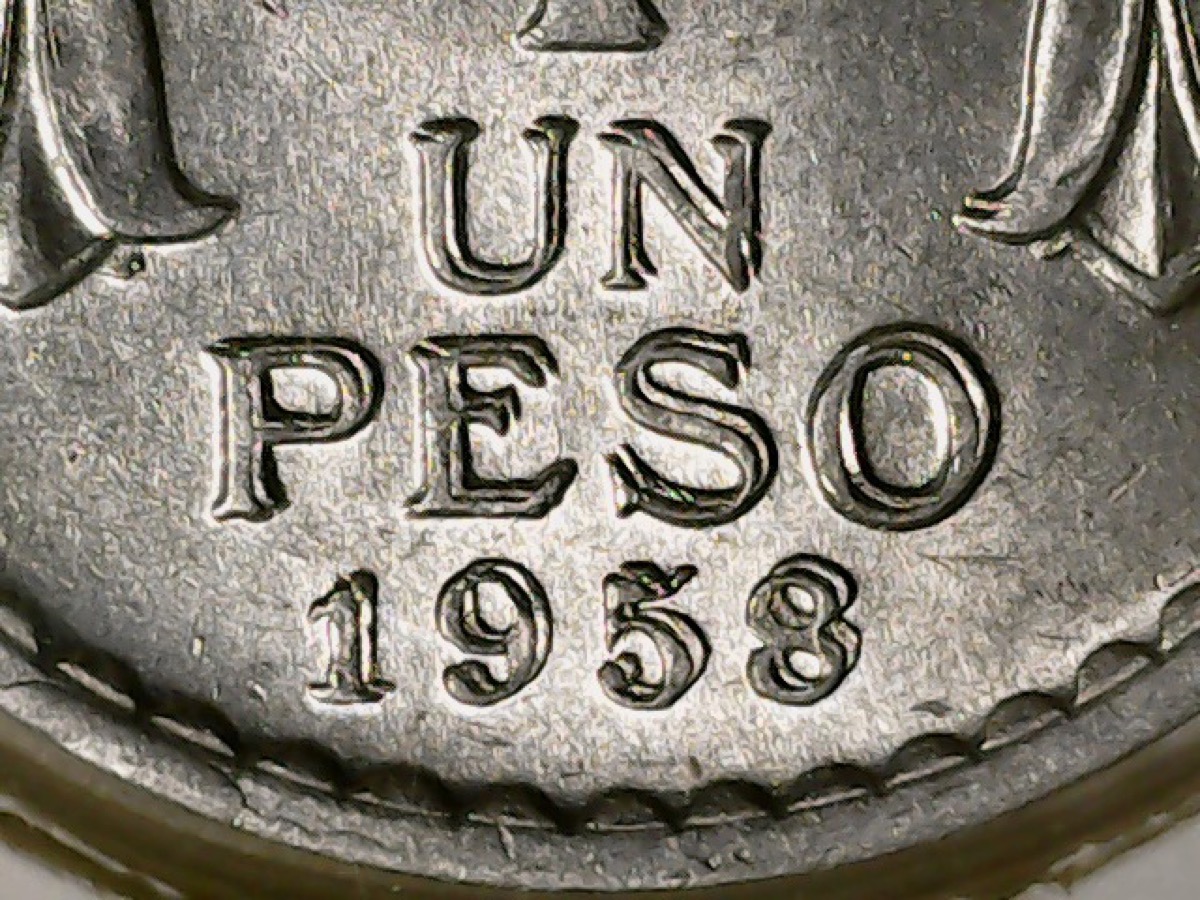
Doubled Die (Reverse)
Same as a doubled die obverse, but the doubling appears on the back of the coin.
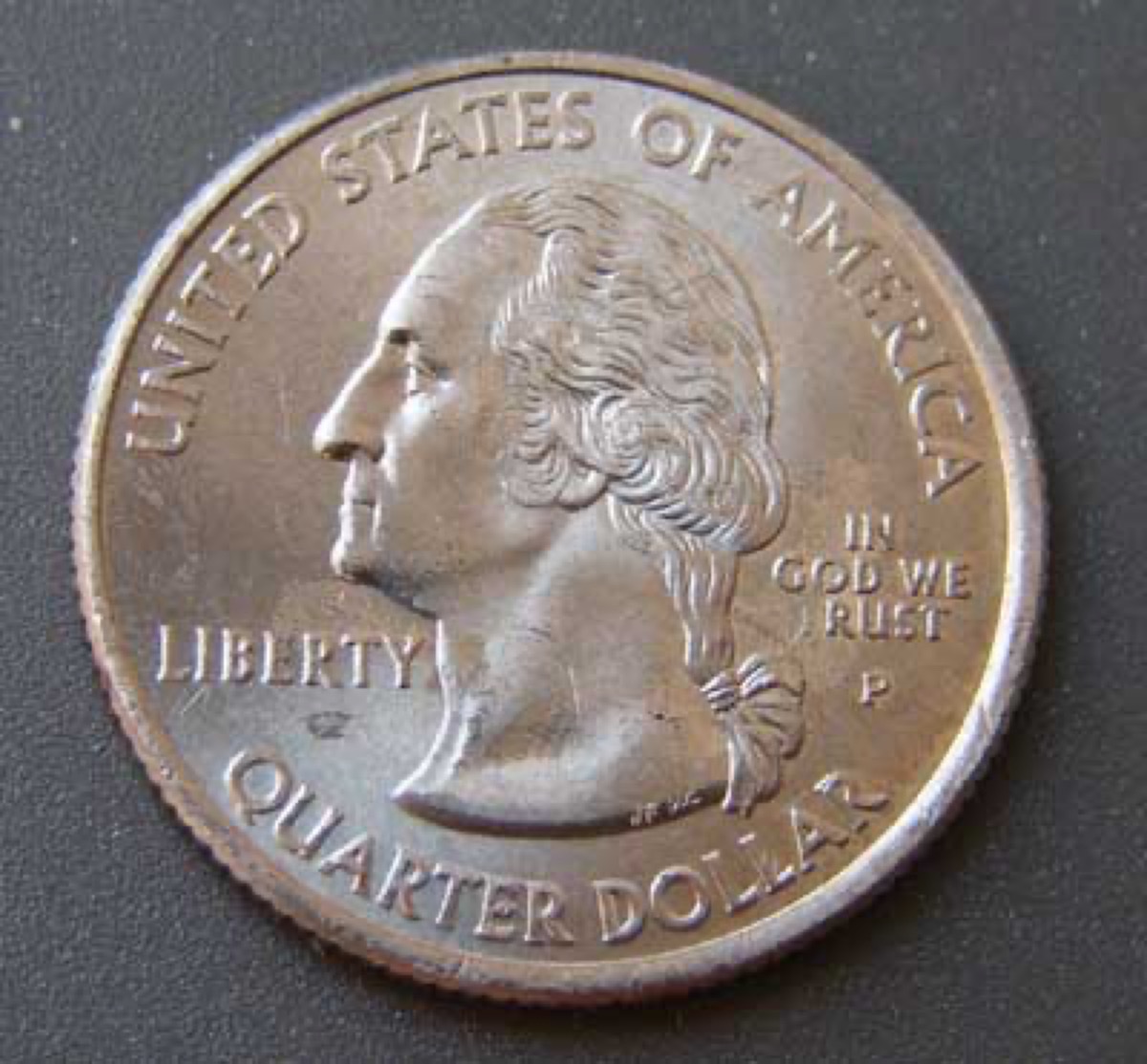
Grease-Filled Die (Struck Through Grease)
Grease and debris packed into the die's recesses blocked part of the design, leaving weak or missing details.
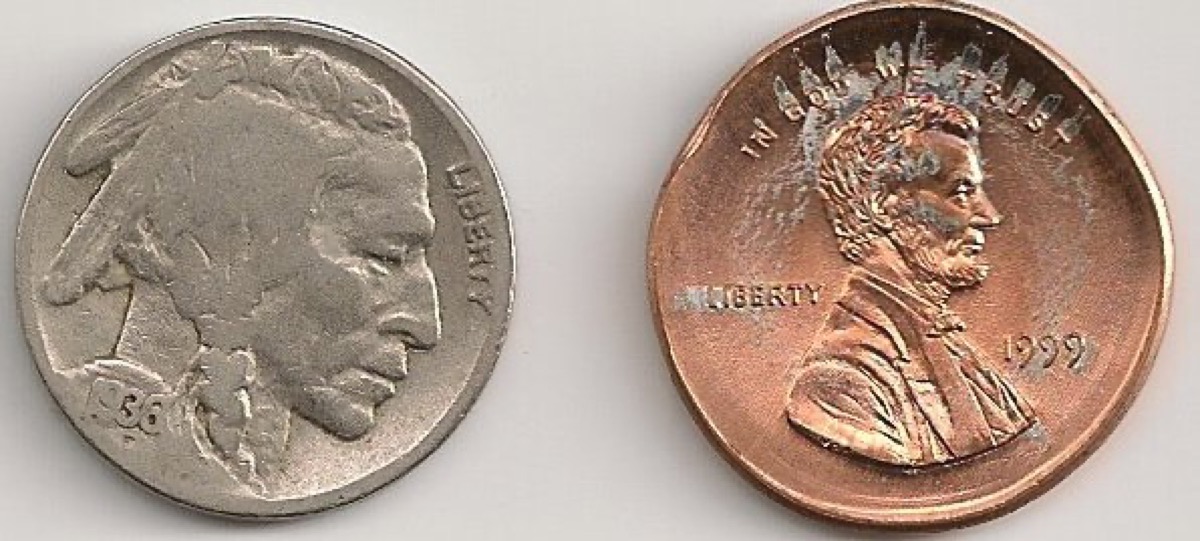
Broadstrike
The coin was struck without its retaining collar, so it spread out wider and thinner than normal.
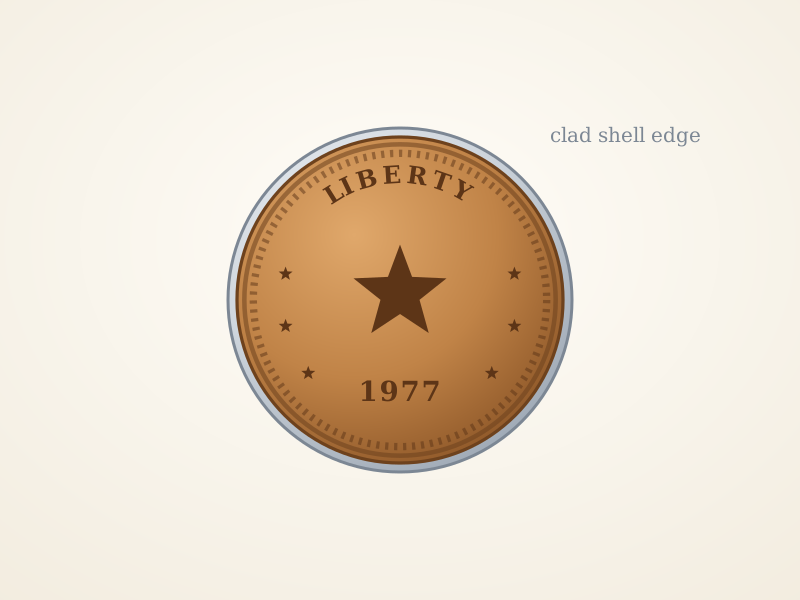
Missing Clad Layer
A dime, quarter, or half is missing its outer silver-colored layer on one side, exposing the copper core.
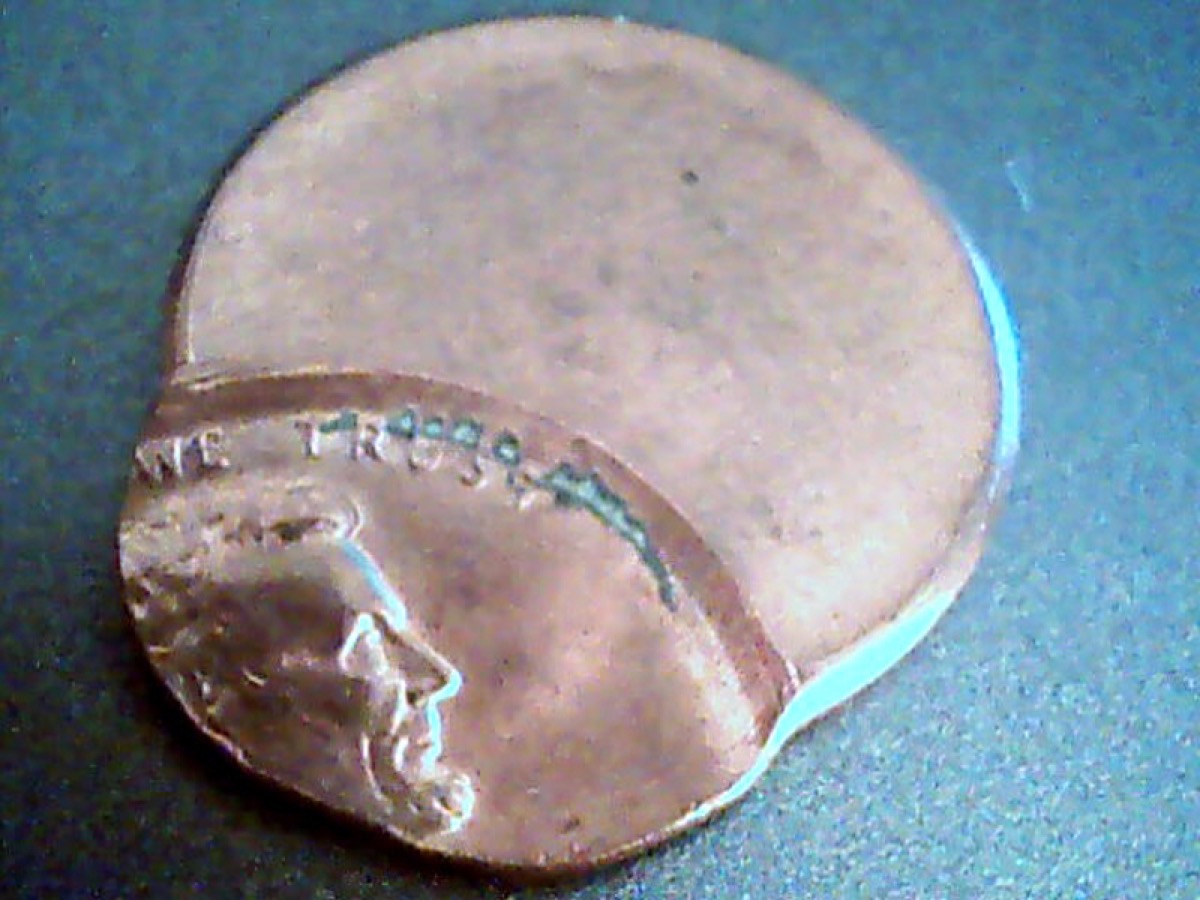
Off-Center Strike
The blank wasn't centered when struck, so part of the design is missing and part of the coin is blank.
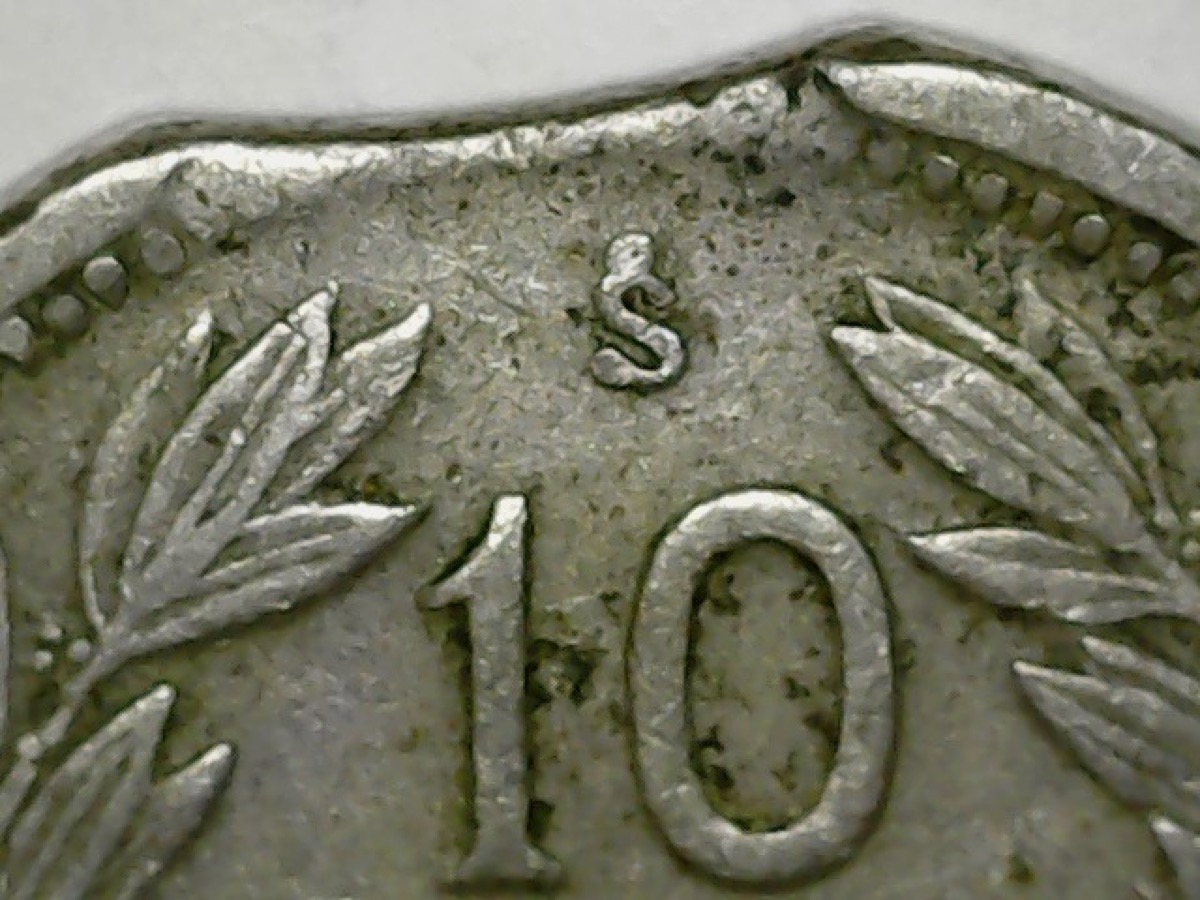
Clipped Planchet
A bite-shaped piece of the coin is missing because the blank was punched from an already-punched part of the metal strip.
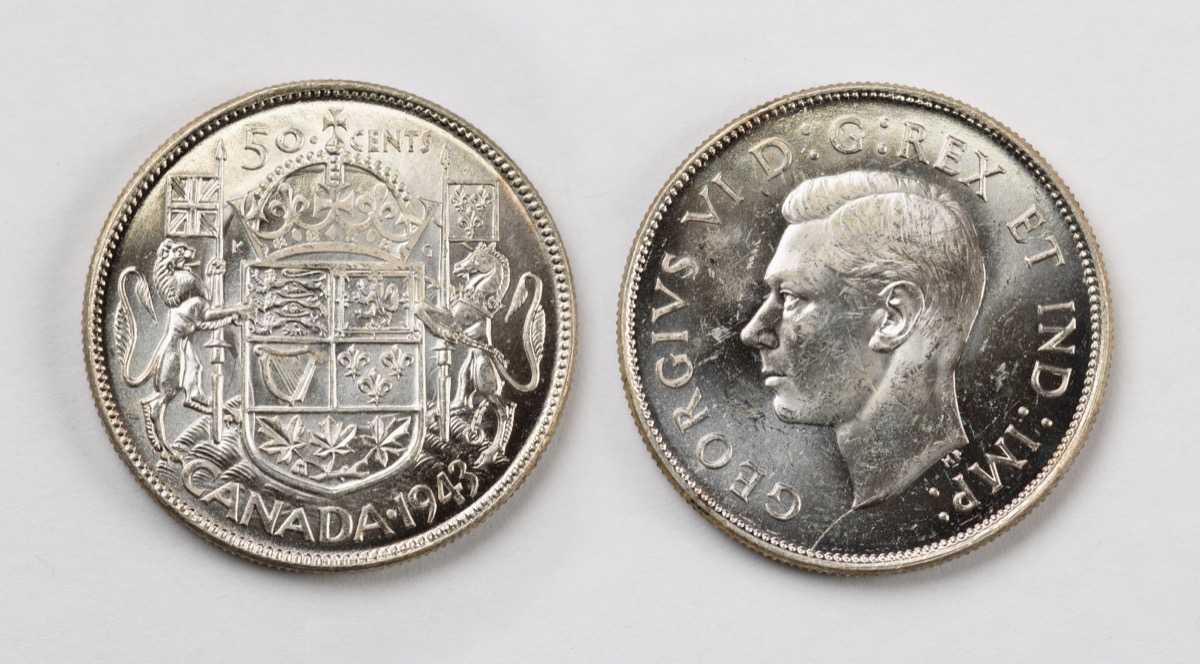
Die Crack
A crack in the die fills with metal during the strike, leaving a thin raised line on the coin.
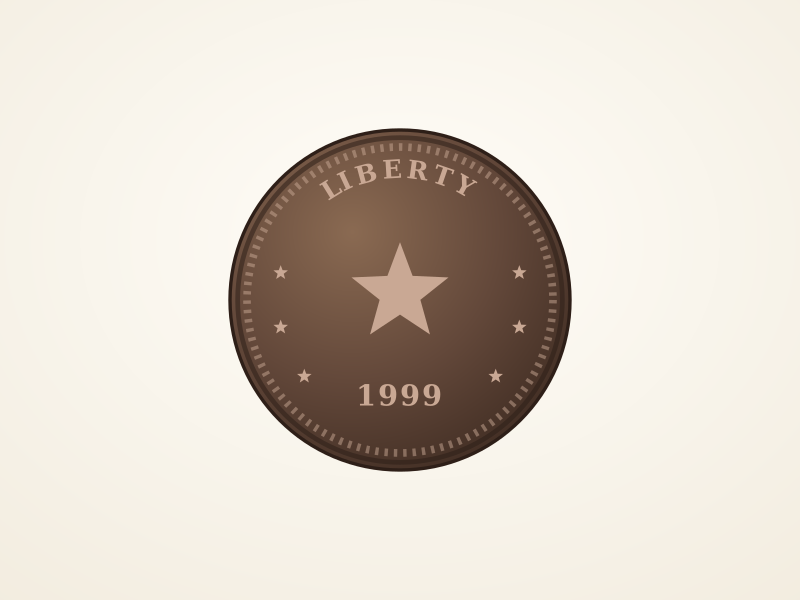
Improperly Annealed Planchet
A heat-treatment mistake turned the blank's surface an unusual color — most famously the coppery-red 'sintered' state quarters and dollars.
Real photos where available (credits); others are illustrations.