Broadstrike
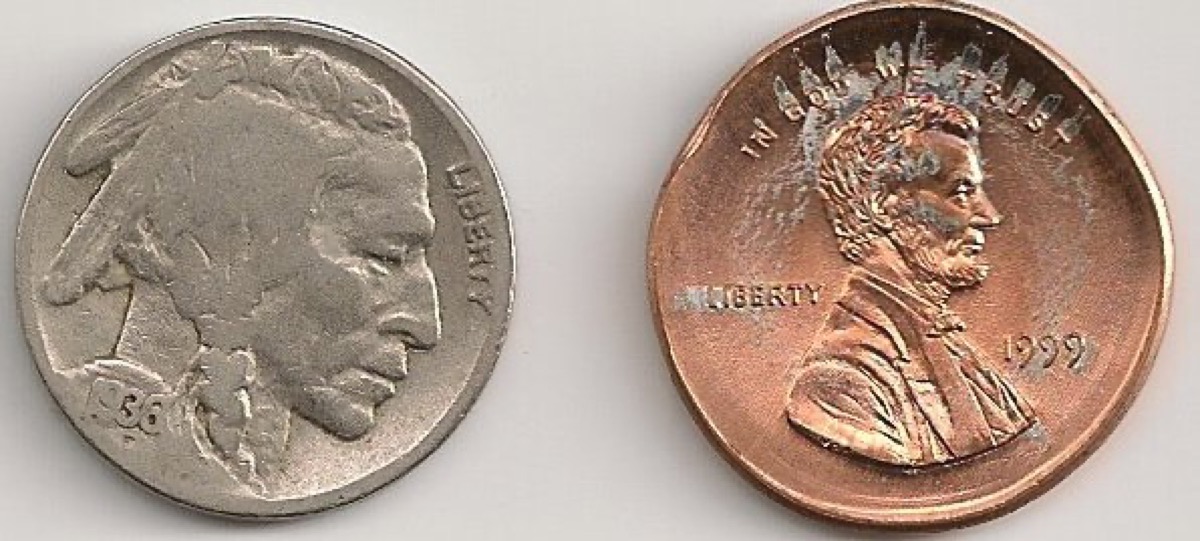
Photo: Economicrealist (Commons uploader; no Artist field in file metadata) · CC BY-SA 3.0 via Wikimedia Commons · Broad-struck 1999 US Lincoln cent expanded to the size of a nickel, shown next to a normal Buffalo nickel for scale; used in Wikipedia's Mint-made errors article. SHA1-matched to Commons original and visually verified.

What it is
When a coin is struck, a steel ring called the collar surrounds the planchet to hold it in shape and form the edge (including reeding on dimes and quarters). If the collar fails to deploy, the metal has nowhere to push against and squishes outward like dough. The result is a coin with a complete, centered design but a wider-than-normal diameter, a thinner profile, and a plain, slightly rounded edge with no reeding. Unlike an off-center strike, the whole design is present.
How to spot it
Compare the suspect coin side by side with a normal coin of the same type: a broadstrike is visibly wider and often slightly out of round. Check the edge; on a dime, quarter, or half, the reeding will be missing or badly distorted because the collar never formed it. The design should be complete and centered, just spread out. A ruler or calipers helps: a broadstruck quarter can measure a millimeter or two over the normal 24.26 mm.
What it's worth
Broadstrikes are affordable errors: modern cents and nickels typically bring $5-$25, quarters and dollars $20-$75, with older or dramatic examples higher. They're a great first error coin for a beginner's collection.
Famous examples
- Broadstruck Lincoln Cents
- Broadstruck Susan B. Anthony Dollars
- Broadstruck Roosevelt Dimes missing edge reeding
Documented varieties with this error
Series where this error is found
Memorial Cent Shield Cent Roosevelt Dime State Quarters SBA Dollar