Doubled Die (Reverse)
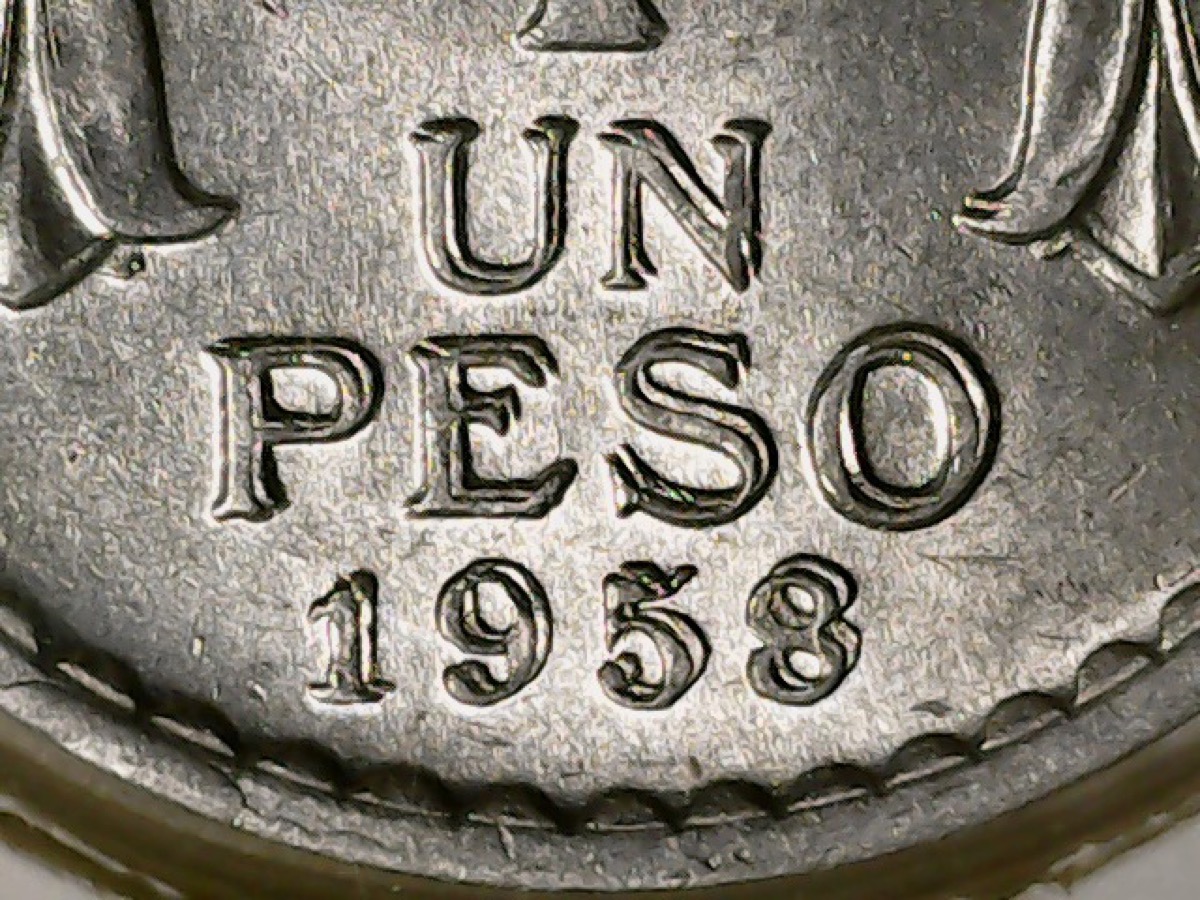
Photo: Jespinos · CC BY-SA 4.0 via Wikimedia Commons · Close-up of the reverse of a 1958 Chile 1 peso; clear doubling on UN PESO and the date 1958. No usable US DDR photo found on Commons (1969-S DDO file is only 200px).

What it is
A doubled die reverse is exactly the same manufacturing mistake as a doubled die obverse, except it happened on the die that strikes the back of the coin. The die picked up two slightly offset versions of the design when it was made, so every coin it struck shows doubling on the reverse lettering or design elements. Because the back of a coin gets less attention than the date side, doubled die reverses are easier to miss, and some have been discovered years after the coins entered circulation.
How to spot it
Flip the coin over and examine the reverse lettering with a 5x-10x loupe: UNITED STATES OF AMERICA, E PLURIBUS UNUM, and the denomination are the usual places. Look for a raised, rounded second image with notched letter corners, not a flat shelf. On the famous 1983 cent, the doubling in ONE CENT and E PLURIBUS UNUM is strong and clear. Compare against photos of the known variety for that date, since real doubled dies always double the same spots.
What it's worth
Value depends entirely on the variety. The 1983 doubled die reverse cent brings roughly $150-$400 in nice uncirculated condition, while minor doubled die reverses may add only $2-$20. Strong, popular varieties are worth real money; faint ones mostly have curiosity value.
Famous examples
- 1983 Doubled Die Reverse Lincoln Cent
- 1961 Proof Doubled Die Reverse Franklin Half
- 2004-D Doubled Die Reverse Wisconsin Quarter (Extra Leaf, often grouped here)
Documented varieties with this error
1983 Doubled Die Reverse
scarce1946 Doubled Die Reverse
scarceSeries where this error is found
Wheat Cent Memorial Cent Bicentennial Cent Buffalo Nickel Jefferson Nickel Roosevelt Dime Washington Quarter State Quarters Territories Quarters ATB Quarters Walking Liberty Franklin Half Morgan