Die Cud
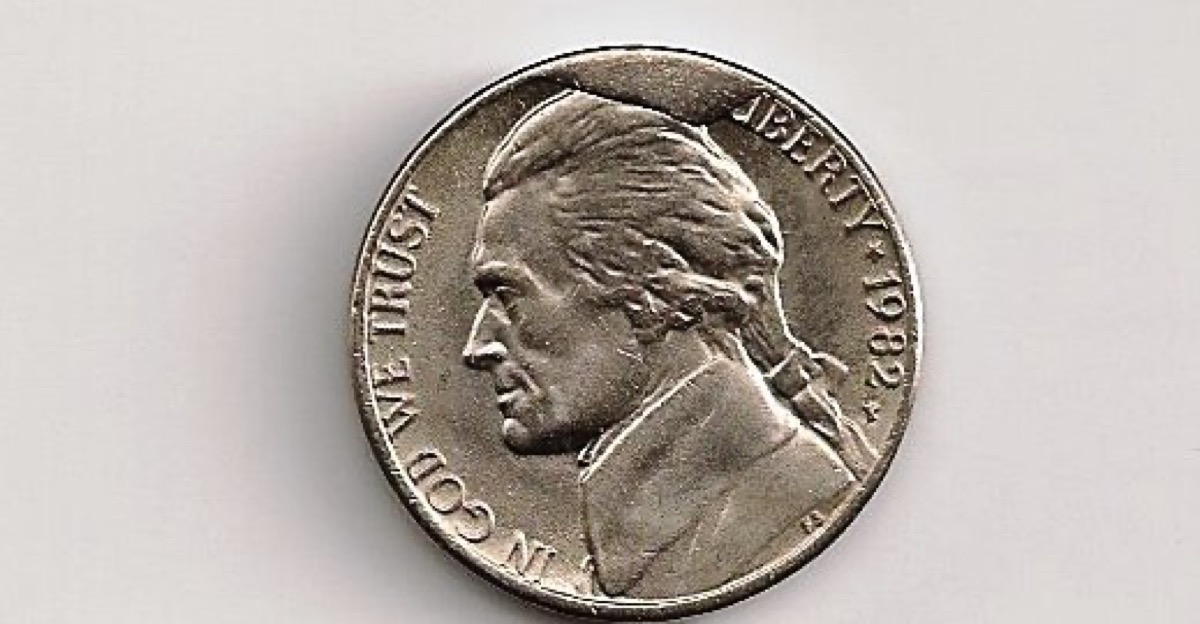
Photo: Uploaded to Commons by Economicrealist (no author listed; released as public domain) · Public domain via Wikimedia Commons · 1982 Jefferson nickel with a raised rim cud at 12 o'clock obliterating the L of LIBERTY. Error clearly visible, but source image is small (519x270) - the only cud photo on Commons.

What it is
A cud forms when a die crack reaches the edge of the die and an entire chunk of the die face breaks away at the rim. With that piece of the die gone, there's nothing to press the design into that area, so coin metal just flows up into the empty space. The result is a raised, smooth, featureless lump attached to the rim of the coin, covering whatever design used to be there. By definition a cud must touch the rim; a broken area in the middle of the die is called an interior die break instead.
How to spot it
Look around the rim for a raised blob that replaces part of the design and connects solidly to the edge of the coin. It should be smooth and rounded, sitting higher than the surrounding surface, with the design ending abruptly where the blob begins. On the opposite side of the coin, the area across from the cud is often weakly struck. If the lump doesn't touch the rim, it's an interior die break, not a cud.
What it's worth
Cuds carry real premiums because they're dramatic and each broken die is unique: small cuds on cents bring $10-$50, large ones $50-$150, and big cuds on scarcer series or older coins can bring several hundred dollars.
Famous examples
- 1955 'Poor Man's' era Lincoln Cent cuds
- Major-cud Buffalo Nickels
- Modern state quarter rim cuds