Strike-Through
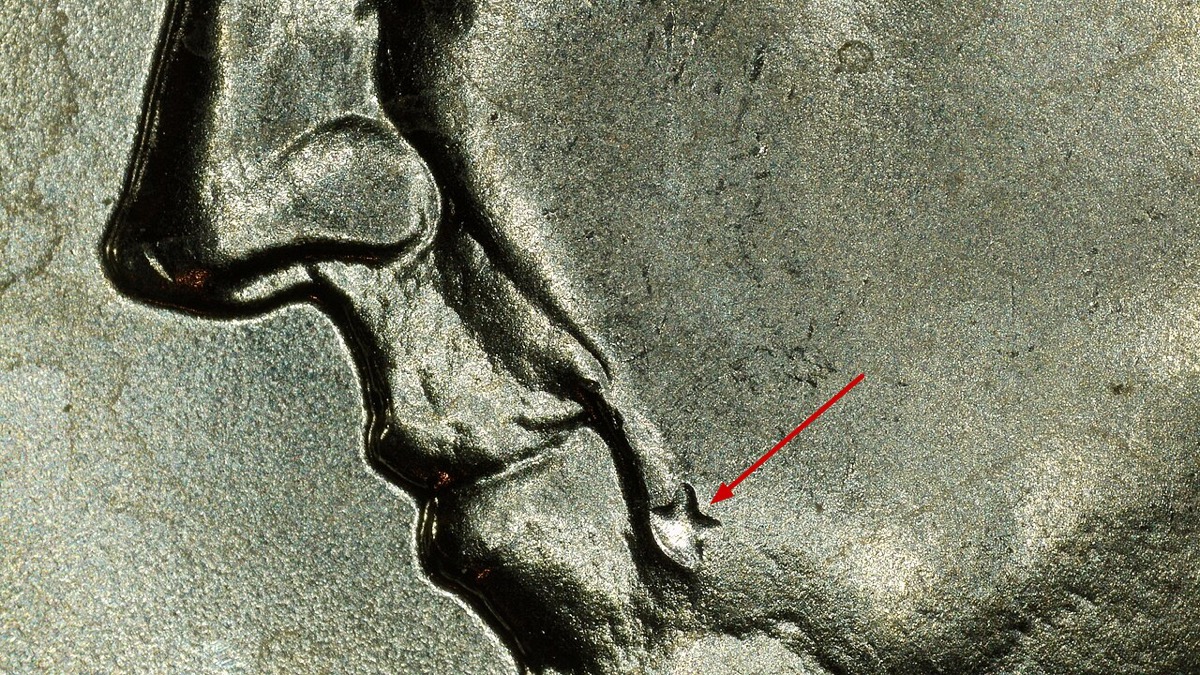
Photo: Dacoinguy · CC BY-SA 4.0 via Wikimedia Commons · Dropped star struck into a Kennedy half dollar obverse (compacted die fill fell onto the planchet before striking) - the image Wikipedia's Mint-made errors article uses for its Strike-through section. Extreme macro closeup; red arrow marks the dropped star. Visually verified. Only strike-through photo on Commons.

What it is
A strike-through happens when something that isn't supposed to be there sits between the die and the planchet at the moment of striking. The object gets pressed into the coin's surface, leaving its exact impression: threads from a rag, a bit of wire, a metal shaving, or a blob of grease. Usually the object falls away, leaving a sunken 'ghost' of its shape; if it stays embedded in the coin, collectors call it a 'retained strike-through,' which is worth more. Struck-through-grease is the most common version and overlaps with the grease-filled die category.
How to spot it
Look for a sunken (incuse) area with a distinctive texture or shape stamped into an otherwise normal surface: the weave pattern of cloth, a curved line from wire, or a smooth amorphous depression from grease. The key detail is that the depressed area's edges look struck, smooth and flowing, rather than gouged with pushed-up metal like a hit. If a foreign object is still embedded, don't pick it out — a retained strike-through is more valuable intact.
What it's worth
Value tracks drama: small grease strike-throughs bring $1-$10, clear cloth or wire impressions $20-$100, and large retained strike-throughs with the object still embedded $50-$300+. Big, photogenic examples on popular series do best.
Famous examples
- Struck-through-cloth Morgan Dollars
- Retained struck-through wire Lincoln Cents
- 'IN GOD WE RUST' 2005 Kansas Quarter (struck through grease)
Series where this error is found
Shield Cent Roosevelt Dime Washington Quarter ATB Quarters Modern Silver Dollars