Wrong Planchet
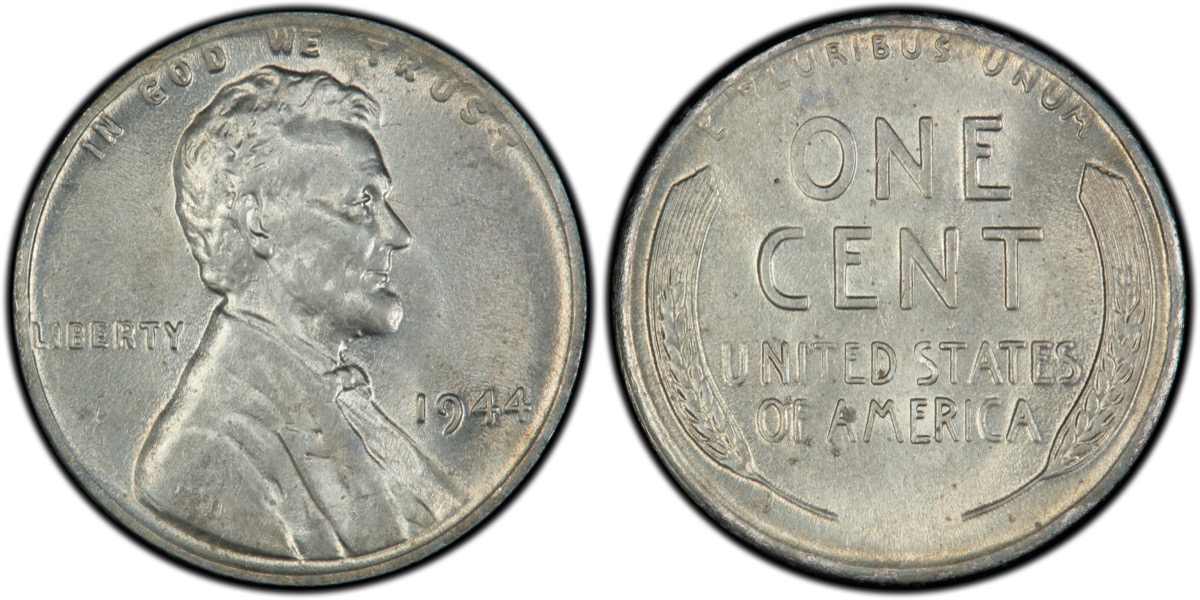
Photo: Professional Coin Grading Service · Public domain via Wikimedia Commons · The famous 1944 steel cent: a 1944 Lincoln cent struck on a leftover 1943 zinc-coated steel planchet instead of the correct bronze planchet - a classic US wrong-planchet error. High-quality PCGS obverse/reverse photo (2200x1101), visually verified. Commons tags it Public domain; page credits Professional Coin Grading Service.

What it is
Mints strike many denominations, and sometimes blanks for foreign coins, in the same facility. Occasionally a blank from one denomination gets stuck in a tote or hopper and ends up fed into a press set up for a different coin. The dies strike whatever arrives, so you get things like a cent design on a dime blank, or a quarter design on a nickel blank. The wrong blank is usually smaller than the intended coin, so part of the design falls off the edge, and the coin has the wrong weight, color, and edge for its design. These are rare, dramatic, and heavily faked, so authentication matters.
How to spot it
Weigh the coin on a scale accurate to 0.01 g: a wrong-planchet coin matches the weight of the donor denomination, not its own design (for example, a 'quarter' weighing 5.0 g is on a nickel blank; a normal clad quarter is 5.67 g). Check the color (a cent design on silver-colored metal, or a dime design on copper) and the diameter with calipers. Design details will typically be cut off near the rim because the blank was too small. Any suspected wrong-planchet coin should go to PCGS or NGC for certification before you buy or sell.
What it's worth
These are among the most valuable modern errors: common combinations like a cent on a dime planchet bring $150-$500, state quarters on nickel planchets $500-$2,000+, and famous rarities like 1943 copper cents (struck on leftover bronze blanks) reach $100,000-$1,000,000. Authentication is essential because fakes are everywhere.
Famous examples
- 1943 Bronze Lincoln Cent
- 1944 Steel Lincoln Cent
- 2000 Sacagawea Dollar/Quarter 'Mule'
- State Quarters struck on nickel planchets
Documented varieties with this error
1943 Bronze Cent
extreme1944 Steel Cent
extreme1982-D Small Date Copper
extremeSeries where this error is found
Wheat Cent Memorial Cent Roosevelt Dime Washington Quarter SBA Dollar Sacagawea