Doubled Die vs. Machine Doubling: The $1,000 Difference
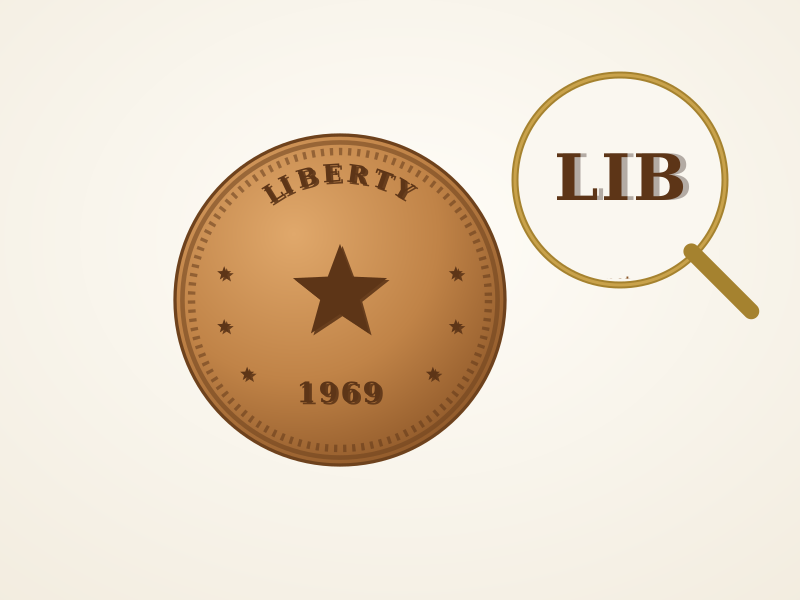
Two coins, both with visibly doubled lettering. One is a 1955 doubled die cent worth $1,000 to $18,000 or more. The other is worth exactly one cent, and dealers see thousands of them every year. Mixing these up is the single most common beginner mistake in all of error collecting — people list machine-doubled coins online for thousands, buy them at those prices, and mail them to grading services only to get back a slip that says "machine doubling." The good news: once you know what to look for, telling them apart takes seconds with a $10 loupe.
Two Different Mistakes at Two Different Moments
The distinction is about when the doubling happened.
A Doubled Die Is Born Before Any Coin Exists
A doubled die is created while the die itself — the steel stamp that presses the design into coins — is being made. The design used to be pressed into the die in multiple steps, and if the die shifted slightly between steps, it ended up carrying two overlapping versions of the design. Every single coin that die struck then shows the same doubling in the same spot. That's why doubled dies are so collectible: they're a true variety, not a one-off accident, and the doubling looks identical from coin to coin.
Machine Doubling Is a One-Off Press Hiccup
Machine doubling (also called mechanical or strike doubling) happens at the instant a single coin is struck: a loose die bounces or twists while still touching the coin, shoving the freshly struck design sideways. Instead of a true second image, the edges of the letters get sheared into a flat step. The die is fine — it just chattered on that strike — so there's no repeatable variety and no collector demand. It is incredibly common on modern coins.
The Five-Point Field Test
- Raised and rounded vs. flat shelf. True doubled die doubling is a full-bodied second image: raised, rounded, like two complete letters stacked slightly apart. Machine doubling looks like the edge of the letter was pushed over and smeared into a flat, low, shelf-like step.
- Notching. Real hub doubling shows notching — little split points at the corners of letters where the two images separate. Machine doubling has no notches, just a smooth sheared ledge.
- Letter width. A doubled die doesn't thin the letters; you're seeing two full impressions. Machine doubling often makes letters look thinner than normal, because part of each letter's width got flattened into the shelf.
- Shine. Machine doubling tends to be shiny where the metal sheared. Doubled-die doubling has the same luster as the rest of the design.
- Does it match a known variety? A real doubled die always doubles the same areas on every coin from that die, and collectors have catalogued the famous ones in detail. If your coin's doubling doesn't match the known spots for that date, be skeptical.
Shorthand worth memorizing: flat + shelf-like + thinned letters = machine doubling = spend it.
Case Studies: Same Date, Opposite Outcomes
1955: The Real One and the "Poor Man's" One
The 1955 doubled die wheat cent shows bold, fully separated doubling on the date, LIBERTY, and IN GOD WE TRUST — visible without magnification, worth $1,000 to $18,000+. The same era also produced the so-called "Poor Man's Doubled Die," a 1955 cent with flat shelf-like doubling from machine bounce. Despite the collectible-sounding nickname, it's machine doubling and adds essentially nothing.
1969-S: When the Mint Mark Tells the Truth
The 1969-S doubled die cent is worth $25,000 to $100,000+, so here's the shortcut the pros use: until about 1990, mint marks were punched into each die separately, after the doubled hubbing would have happened. So on a genuine 1969-S doubled die, LIBERTY, IN GOD WE TRUST, and the date are doubled but the S is not. If the S mint mark is doubled along with everything else, the whole coin moved during the strike — machine doubling, worth face value. A doubled mint mark on any 1960s-1980s coin is the classic machine-doubling tell.
Doubling Isn't Just a Penny Thing
The same test works across denominations. The 1974-D Kennedy half dollar doubled die shows clear separated doubling on WE TRUST and brings $30 to $500+. The 1983 Memorial cent has a bold doubled die reverse — every letter of ONE CENT and UNITED STATES OF AMERICA shows a second outline — worth $50 to $400 and genuinely findable in old rolls. And the 1964-D Roosevelt dime doubled die reverse brings $25 to $250+. In every case, the valuable version passes the raised-and-rounded test; the shelf-like lookalikes are worth face value.
Why the Difference Is Worth Exactly This Much
Value in error collecting follows rarity and repeatability. A doubled die is a documented variety — a specific die, a known number of survivors, a catalog listing at PCGS and NGC — so demand concentrates on it and prices hold. Machine doubling can happen to any coin on any strike, so the supply is effectively infinite. That's the entire $1,000 difference (or $100,000 difference, for a 1969-S) compressed into one question: is the second image in the die or from the bounce?
Your 30-Second Routine
- Put a 5x-10x loupe on the doubled area in good light.
- Judge the shape: rounded second image with notched corners, or flat shiny shelf?
- Check letter thickness — thinned letters point to machine doubling.
- On pre-1990 coins, check the mint mark: doubled mint mark plus doubled everything = machine doubling.
- Compare against the known doubled spots for that date and variety.
Still unsure? Photograph the coin and run it through the MintMark identifier, browse the doubled die and machine doubling guides side by side, or check the FAQ. Learning this one distinction will save you more money — and more embarrassment — than any other skill in coin collecting.
Check your own coins
Photograph any U.S. coin and see its valuable varieties in seconds.
Identify my coin